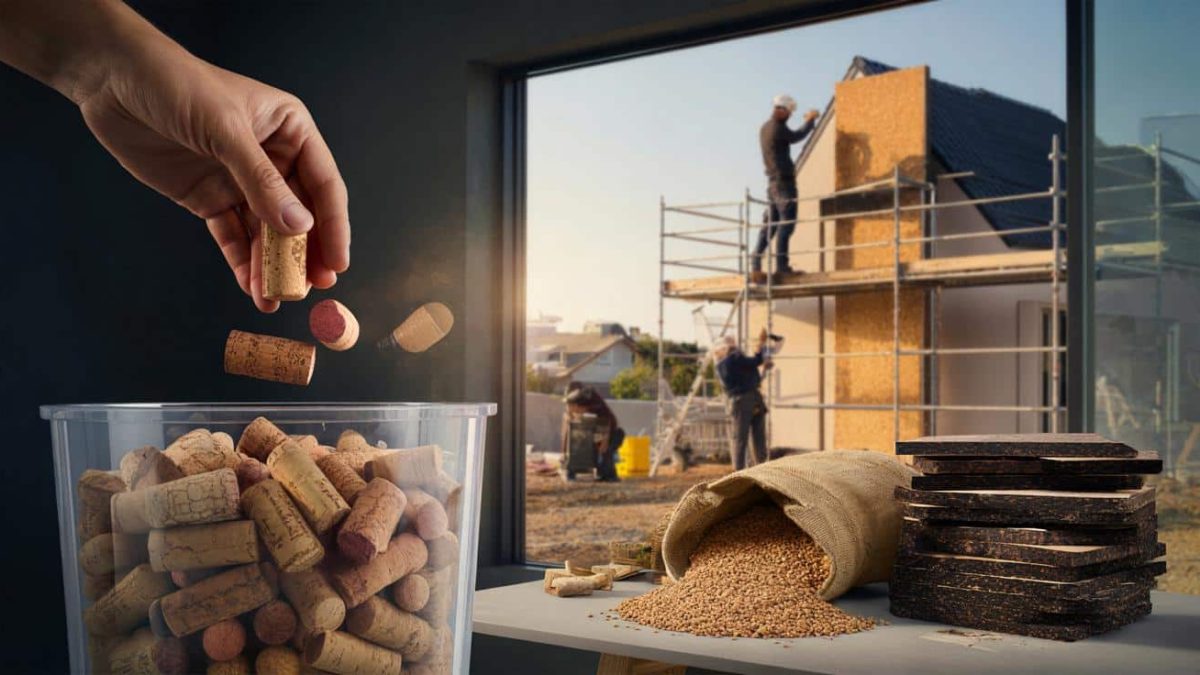
Popping open a wine bottle, the cork pops out – and then what? For many, the small natural stopper ends up in the trash. But what they don’t know is that this material contains a building material that is quietly setting records.
Why is cork suddenly becoming a star construction material? And how can you properly collect corks to make construction projects stronger? From bottle closure to thermal insulation – what does this mean for us?
Recycling Corks – A Profitable Business
Cork is a remarkable natural material that has long been overlooked as a waste product. But in recent years, the construction industry has recognized the immense potential of this renewable resource. Cork’s unique properties, such as its lightweight, insulation capabilities, and environmental friendliness, have made it a highly sought-after material for a variety of building applications.
One of the main advantages of cork is its impressive thermal insulation properties. Unlike many synthetic insulation materials, cork is a natural, sustainable option that can help reduce energy consumption and lower heating and cooling costs in buildings. This has made it a popular choice for homeowners and construction companies alike.
But the benefits of cork don’t stop there. It is also highly durable, water-resistant, and fire-retardant, making it an ideal material for flooring, wall coverings, and even acoustic insulation. Additionally, the production of cork is environmentally friendly, as the bark of the cork oak tree can be harvested without damaging the tree itself.
The Incredible Potential of Cork
As the construction industry becomes more conscious of its environmental impact, the demand for sustainable building materials like cork has skyrocketed. Experts predict that the global cork market will continue to grow rapidly in the coming years, with a projected value of over $30 billion by 2027.
One of the most exciting developments in the cork industry is the emergence of new applications and technologies. Researchers are constantly exploring new ways to utilize cork, from developing innovative building materials to creating high-performance insulation products. This has led to a surge of investment and innovation in the cork sector, with companies and startups around the world working to unlock the full potential of this remarkable natural resource.
But the real game-changer in the cork industry may be the growing awareness among consumers and homeowners. As people become more conscious of the environmental impact of their choices, they are increasingly seeking out sustainable, eco-friendly building materials like cork. This has created a ripple effect, with more and more construction companies and developers incorporating cork into their projects to meet the growing demand.
Collecting Corks: A Simple Way to Support Sustainability
For individuals who want to contribute to the cork revolution, collecting and recycling used corks is a simple and effective way to make a difference. By saving their corks and donating them to specialized collection programs, people can help divert this valuable material from landfills and ensure that it is put to good use in the construction industry.
There are many organizations and initiatives around the world that accept cork donations and either recycle them or use them to create new products. Some companies even offer incentives or rewards for cork collection, making it an easy and rewarding way for people to get involved in the sustainable cork movement.
But the benefits of cork collection go beyond just environmental sustainability. By supporting the cork industry, individuals can also contribute to the livelihoods of the communities that rely on cork production, particularly in regions like the Mediterranean, where cork oak forests are an important part of the local economy.
The Future of Cork in Construction
As the construction industry continues to evolve and embrace more sustainable practices, the role of cork is only expected to grow. Experts predict that the use of cork in building materials will become increasingly widespread, with new applications and innovations emerging all the time.
One area where cork is particularly well-suited is in the realm of energy-efficient construction. As buildings become more focused on reducing their carbon footprint and improving their environmental performance, the insulation and thermal regulation properties of cork make it an increasingly attractive option for developers and homeowners alike.
But the future of cork in construction goes beyond just its environmental benefits. The material’s unique aesthetic qualities, such as its natural texture and earthy tones, have also made it a popular choice for interior design and architectural applications. From flooring and wall coverings to decorative elements, cork is becoming a sought-after material for its blend of functionality and style.
The Cork Collector’s Guide
| Benefits of Collecting Corks | Tips for Effective Cork Collection |
|---|---|
|
|
“Cork is a remarkable natural material that has the potential to revolutionize the construction industry. Its unique properties, combined with its environmental sustainability, make it an increasingly valuable resource for builders and homeowners alike.”
– Dr. Maria Fernández, Building Materials Researcher
The Growing Demand for Cork in Construction
As the construction industry continues to evolve and embrace more sustainable practices, the demand for cork-based building materials is expected to soar. Experts predict that the global cork market will grow exponentially in the coming years, driven by the increasing popularity of eco-friendly construction solutions and the growing awareness of cork’s remarkable properties.
One of the key factors behind the rising demand for cork is the material’s exceptional thermal insulation capabilities. In a world where energy efficiency and climate-friendly building practices are becoming increasingly important, cork’s ability to regulate temperature and reduce energy consumption has made it a highly sought-after resource.
But the benefits of cork go beyond just energy efficiency. The material is also highly durable, water-resistant, and fire-retardant, making it an ideal choice for a wide range of construction applications, from flooring and wall coverings to acoustic insulation and even structural components.
“The construction industry is undergoing a remarkable transformation, and cork is at the forefront of this change. As more developers and homeowners seek out sustainable, eco-friendly building materials, the demand for cork is only going to continue growing.”
– Martin Schneider, Construction Industry Analyst
The Environmental Impact of Cork Collection
Beyond its practical applications in the construction industry, the act of collecting and recycling corks can also have a significant positive impact on the environment. By diverting these natural materials from landfills and ensuring they are put to good use, cork collection initiatives can help reduce waste, conserve natural resources, and support the development of a more sustainable economic model.
One of the most compelling aspects of cork collection is its connection to the preservation of cork oak forests, which are an important part of the ecosystem in many regions around the world. By supporting the cork industry, individuals can contribute to the protection of these valuable habitats and the communities that rely on them.
Moreover, the production of cork is inherently sustainable, as the bark of the cork oak tree can be harvested without damaging the tree itself. This makes cork a renewable and environmentally friendly resource, which is a key consideration for many consumers and businesses seeking to reduce their carbon footprint.
“Collecting and recycling corks is not just about supporting the construction industry – it’s also about preserving our natural environment and the communities that depend on it. By participating in cork collection programs, individuals can make a real difference in creating a more sustainable future.”
– Emma Bauer, Environmental Policy Analyst
FAQ
What are the main benefits of using cork in construction?
The main benefits of using cork in construction include its excellent thermal insulation properties, durability, water-resistance, and fire-retardant qualities. Cork is also a renewable and environmentally-friendly material, making it a popular choice for sustainable building practices.
How can I start collecting corks to support the construction industry?
To start collecting corks, you can save them from wine bottles and other cork-sealed products. Look for local or national cork collection programs in your area that accept donations and recycle or repurpose the corks. Many organizations also offer incentives or rewards for cork collection.
What are the environmental benefits of cork collection and recycling?
Cork collection and recycling help divert waste from landfills, support the preservation of cork oak forests, and contribute to a more sustainable economic model. By participating in cork collection initiatives, individuals can make a positive impact on the environment and the communities that rely on cork production.
How is the construction industry using cork in new and innovative ways?
The construction industry is constantly exploring new applications and technologies for cork, from developing innovative building materials to creating high-performance insulation products. As the demand for sustainable construction solutions grows, the role of cork in the industry is expected to continue expanding in the coming years.
What are the key factors driving the growth of the global cork market?
The growth of the global cork market is being driven by several key factors, including the increasing demand for eco-friendly construction materials, the growing awareness of cork’s unique properties, and the rising focus on energy-efficient building practices. Experts predict that the cork market will continue to experience rapid expansion in the coming years.
How can individuals contribute to the sustainable cork movement?
Individuals can contribute to the sustainable cork movement by collecting and recycling used corks, donating them to specialized collection programs, and raising awareness about the benefits of cork in construction and the environment. By getting involved in the cork revolution, people can make a real difference in creating a more sustainable future.
What are some of the innovative ways cork is being used in construction?
In addition to traditional applications like insulation and flooring, cork is also being used in innovative ways in construction, such as as structural components, acoustic insulation, and even as a replacement for traditional building materials like concrete and steel. Researchers are constantly exploring new ways to utilize this versatile natural resource.
How can collecting corks benefit local economies and communities?
By supporting the cork industry through collection and recycling initiatives, individuals can contribute to the livelihoods of the communities that rely on cork production, particularly in regions like the Mediterranean where cork oak forests are an important part of the local economy. This can have a positive ripple effect on the social and economic well-being of these communities.